Micro Silica in Concrete: What It Does, How Much to Add and When It Pays
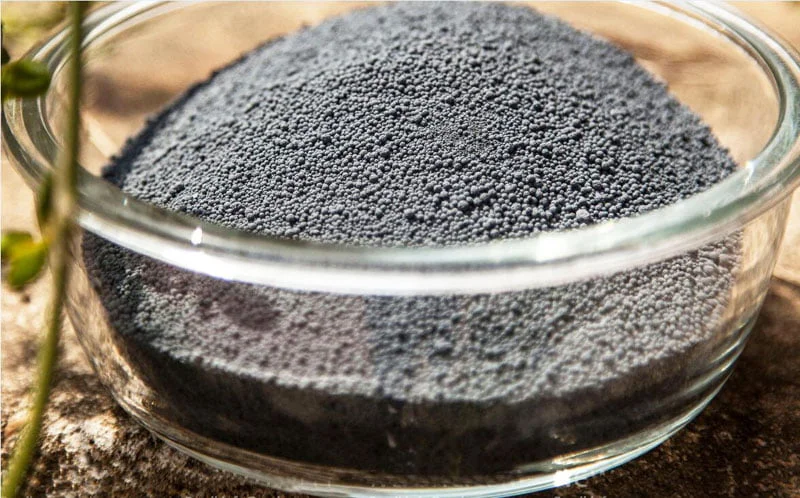
Micro silica – also called silica fume – is a fine grey powder that transforms ordinary concrete into something much denser and more durable. It is not new and it is not exotic. Every major marine structure built in the Gulf over the last twenty years almost certainly contains it. But a lot of contractors still treat it as a mystery additive, dose it wrong, or skip it where it would have saved a structure.
Here is what micro silica actually does, how much to add, and when the extra cost pays for itself.
What Micro Silica Is
Micro silica is a byproduct of silicon and ferrosilicon production. Electric arc furnaces making silicon metal give off a vapour that condenses into extremely fine spherical particles of amorphous silicon dioxide – typically 85 to 95 percent SiO2 or higher.
The particle size is the whole point. Average diameter is around 0.15 microns, roughly one hundred times finer than cement grains. One kilogram of micro silica has a surface area of about 20,000 square metres. Those numbers explain everything the material does in concrete.
What It Does in Concrete
Fills the Gaps
Cement grains do not pack tightly – there are microscopic voids between them, and those voids fill with water that later becomes porosity. Micro silica particles are small enough to sit inside those gaps. The result is physically denser concrete with far fewer capillary channels for water and chlorides to travel through.
Reacts With the Weak Part of Cement Paste
When cement hydrates, it produces calcium hydroxide – the weakest, most soluble component of hardened paste. Micro silica reacts with that calcium hydroxide and converts it into more calcium silicate hydrate, the strong binder phase. So the material both removes a weakness and adds strength at the same time.
The Practical Results
In numbers that matter on site:
- Compressive strength gains of 15 to 30 percent at the same water-cement ratio, with 100+ MPa achievable in high-performance mixes
- Chloride permeability cut by a factor of 5 to 10 – the single biggest reason it is specified for Gulf marine work
- Much lower water penetration, better sulphate resistance, reduced bleeding
How Much to Add
Dosage is expressed as a percentage of cement weight. The working ranges:
| Dosage | Application |
| 5 – 7% | General durability improvement, water-retaining structures |
| 7 – 10% | Marine structures, chloride exposure, Gulf coastal work – the most common specification range |
| 10 – 15% | High-performance concrete, 80-100+ MPa, aggressive chemical exposure |
Two rules that save projects. First: micro silica makes concrete sticky and water-hungry, so it always goes with a superplasticiser. Never add extra water to recover workability – that destroys the benefit you are paying for. Second: above about 15 percent dosage, returns diminish and the mix becomes hard to place. More is not better.
Curing matters more with micro silica than with plain concrete. The dense mix self-desiccates, and in Gulf summer heat, poor curing causes plastic shrinkage cracking. Start wet curing early and hold it for at least 7 days.
When the Extra Cost Pays
Micro silica adds cost per cubic metre. Where it pays for itself is durability, and the arithmetic is not close. Chloride-driven corrosion of reinforcement is the number one cause of structural repair in the Gulf. Cutting chloride permeability by a factor of five extends time-to-corrosion by decades. Against the cost of one major repair contract on a marina, jetty or basement wall, the additive cost disappears.
Where it does not pay: interior structural work with no chloride or chemical exposure, and any pour where the site team will not manage curing properly. Micro silica in a badly cured slab is money wasted.
Buying Micro Silica in the UAE
Jazeera International supplies densified micro silica meeting ASTM C1240 from our Dubai warehouse, in 25kg bags and jumbo bags, with delivery across the UAE and export to Saudi Arabia and Qatar. Certificate of Analysis with every shipment.
Frequently Asked Questions
Q: What does micro silica do in concrete?
A: Two things. Physically, its ultra-fine particles (about 100 times finer than cement) fill the voids between cement grains, making the concrete denser and cutting chloride permeability by 5 to 10 times. Chemically, it reacts with calcium hydroxide – the weak phase of cement paste – and converts it into additional calcium silicate hydrate, the strong binder. The combination gives 15 to 30 percent strength gain and much longer life in marine and chemical exposure.
Q: How much micro silica should be added to concrete?
A: Dosage is 5 to 15 percent by weight of cement. Use 5-7 percent for general durability, 7-10 percent for marine and chloride exposure (the most common Gulf specification), and 10-15 percent for high-performance concrete above 80 MPa. Always pair it with a superplasticiser – never add extra water to recover workability. Above 15 percent, returns diminish and placement gets difficult.
Q: Is micro silica the same as silica fume?
A: Yes. Micro silica and silica fume are two names for the same material – condensed silicon dioxide vapour from silicon and ferrosilicon production, typically 85-95+ percent amorphous SiO2 at around 0.15 micron particle size. The relevant standard is ASTM C1240. It should not be confused with silica sand or quartz powder, which are crystalline and far coarser.
Q: Why is micro silica specified for marine concrete in the Gulf?A: Chloride-driven rebar corrosion is the main cause of structural failure in Gulf coastal concrete. Micro silica cuts chloride permeability by a factor of 5 to 10, extending time-to-corrosion by decades. For marinas, jetties, sea walls, desalination structures and coastal basements, the small additive cost is negligible against the cost of one corrosion repair contract.