Concrete Spacer Blocks: Sizes, Cover Requirements and How to Use Them
Concrete cover is the distance between the steel reinforcement and the outside face of the concrete. Get it right and the structure lasts fifty years. Get it wrong and the rebar corrodes, the concrete spalls, and somebody is paying for repairs inside a decade. Spacer blocks are the small, cheap, unglamorous components that decide which of those two things happens.
This covers what sizes exist, how many you need, and how to pick the right one for each pour.
What a Spacer Block Does
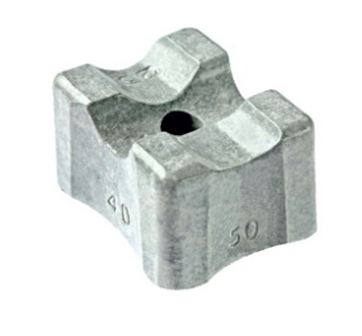
A spacer block sits between the rebar cage and the formwork or the blinding. It holds the steel at a fixed distance from the face so that when concrete is poured and vibrated, the bars stay where the drawings say they should be. Without spacers, rebar sinks, shifts under foot traffic on site, or gets pushed against the shutter during the pour.
Concrete spacers are made from the same cement and aggregate as the structure. That matters more than it sounds. A plastic spacer creates a permanent void path from the surface to the steel. A cement spacer bonds into the pour and becomes part of the concrete, so there is no path for water or chlorides to follow.
Standard Sizes and What They Are For
Spacer blocks are named by the cover they provide, not by their physical dimensions. A 40mm spacer gives 40mm of cover.
| Size | Typical Use | Notes |
| 15 – 20mm | Precast panels, thin slabs, screeds | Light duty, small bar diameters |
| 25mm | Internal slabs, beams not exposed to weather | Common minimum for protected internal work |
| 30 – 40mm | General structural slabs, beams, columns | The most-used range on UAE sites |
| 50mm | External elements, exposed structures | Standard for weather-exposed concrete |
| 60 – 75mm | Foundations, ground-contact, marine works | Highest cover for aggressive exposure |
If the structural drawing specifies cover, use that number. It is not a suggestion – the cover figure comes from the exposure class and the design life.
How Much Cover Do You Actually Need
Cover requirements come from exposure condition. The wetter and saltier the environment, the more cover the steel needs. In the Gulf this matters more than in temperate climates because chloride levels in the air and groundwater are high and reinforcement corrosion is the number one cause of premature structural repair.
Broad guidance used on UAE projects, subject to whatever the structural engineer specifies:
- Internal, dry, protected: 20 to 25mm
- External but sheltered from rain and spray: 30 to 40mm
- Exposed external, no chloride source: 40 to 50mm
- Coastal, marine spray zone, chloride exposure: 50 to 75mm
- Cast against ground or blinding: 50 to 75mm
How Many Spacers Per Square Metre
The usual site rule is four spacers per square metre of mesh or bar layer for slabs. Heavier bar diameters need more because the steel is stiffer and sags less, but the weight pushes harder at the support points. Vertical elements like walls and columns need spacers on both faces, typically at 500 to 800mm centres, tied to the cage so they cannot fall out while the shutter is closed.
For a 1,000 square metre slab with a single rebar layer, budget around 4,000 spacers. Two layers doubles it. Order 10 percent over – they break during handling and nobody ever has enough at the last pour.
Three Mistakes That Cost Money
Using the Wrong Size to Save Time
The site runs out of 50mm and uses 40mm to keep the pour moving. Ten millimetres of missing cover on a coastal structure can cut the time to corrosion initiation by years. It is the kind of shortcut nobody sees until the spalling starts.
Not Tying Spacers to the Cage
Spacers that are placed but not tied get knocked out of position by workers walking the cage and by the concrete flow during the pour. On vertical faces they simply fall to the bottom of the shutter. Tie them.
Spacing Them Too Far Apart
Rebar sags between supports. Too few spacers and the steel dips below the specified cover in the middle of each span even though it is correct at every spacer. The four-per-square-metre rule exists for this reason.
Buying Spacer Blocks in the UAE
Jazeera International supplies concrete spacer blocks in all standard sizes from 15mm to 75mm from our Dubai warehouse, by the bag or by the pallet, with delivery across Dubai and Sharjah. Bulk pricing for contractors running multiple sites.
FAQs
Q: What are concrete spacer blocks used for?
A: They hold steel reinforcement at the correct distance from the formwork or blinding so the finished concrete has the specified cover over the rebar. Correct cover protects the steel from moisture and chlorides. Without spacers the bars shift during pouring and end up too close to the surface, which leads to corrosion and spalling later.
Q: What size spacer block do I need?
A: Match the spacer size to the cover specified on the structural drawing. Common sizes are 25mm for protected internal work, 30 to 40mm for general structural slabs and beams, 50mm for weather-exposed elements, and 50 to 75mm for foundations, ground contact and coastal or marine structures. In the Gulf, chloride exposure usually pushes external cover to the higher end.
Q: How many spacer blocks per square metre?
A: The standard site rule is four per square metre for each layer of slab reinforcement. Vertical elements like walls and columns need spacers on both faces at roughly 500 to 800mm centres, tied to the cage. Order about 10 percent extra – a proportion always breaks during handling.
Q: Are concrete spacers better than plastic spacers?
A: For durability, yes. Concrete spacers are made from cement and aggregate, so they bond into the pour and become part of the structure. Plastic spacers do not bond, which leaves a small permanent path from the surface toward the steel that water and chlorides can follow. Plastic has advantages in speed and weight, but concrete is the safer choice in aggressive exposure conditions.