Blasting Abrasives We Supply Across Saudi Arabia
We supply three main categories of blasting abrasive, each suited to different applications and budget levels.
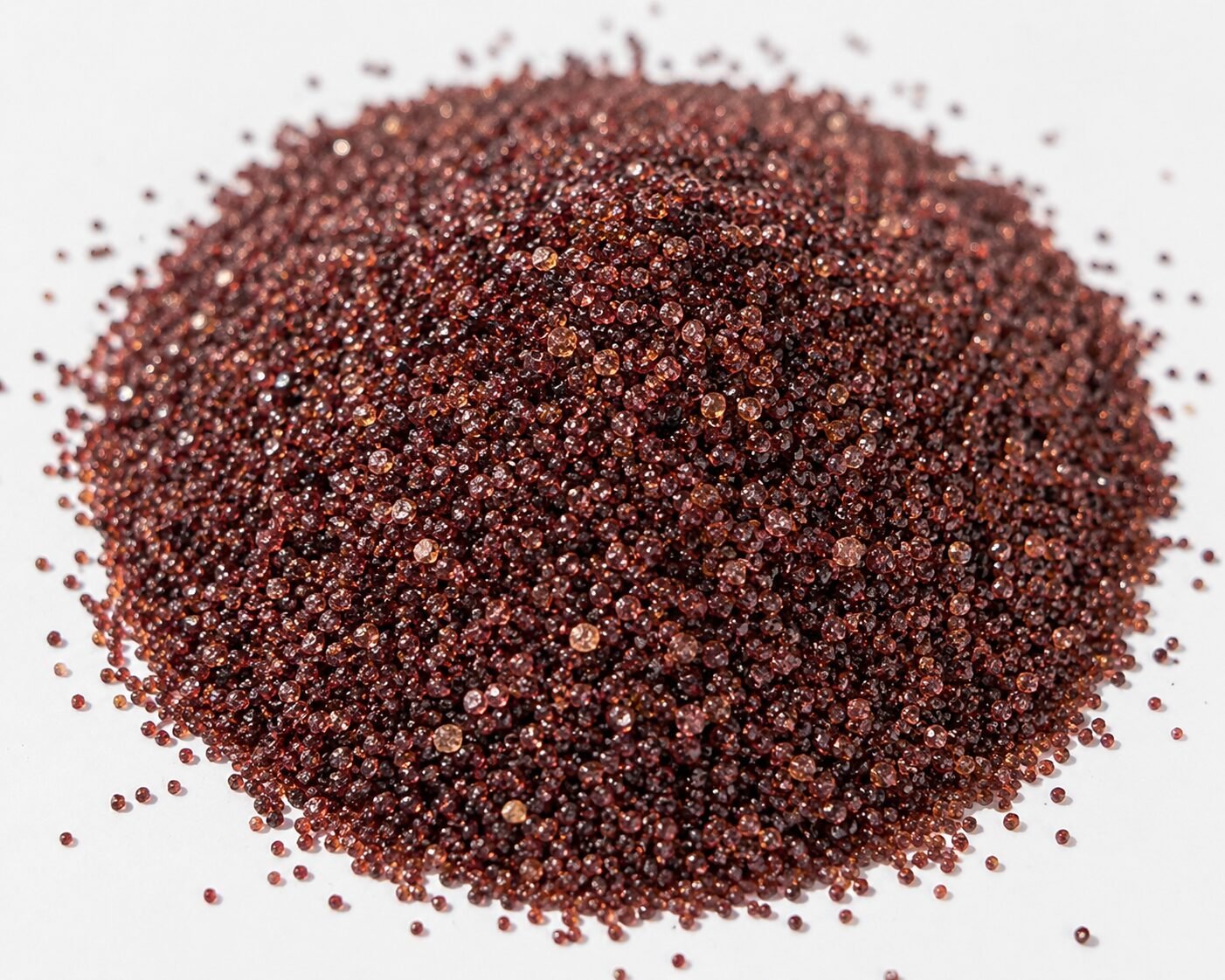
Garnet Sand — Premium Abrasive (30/60 and 20/40 Mesh)
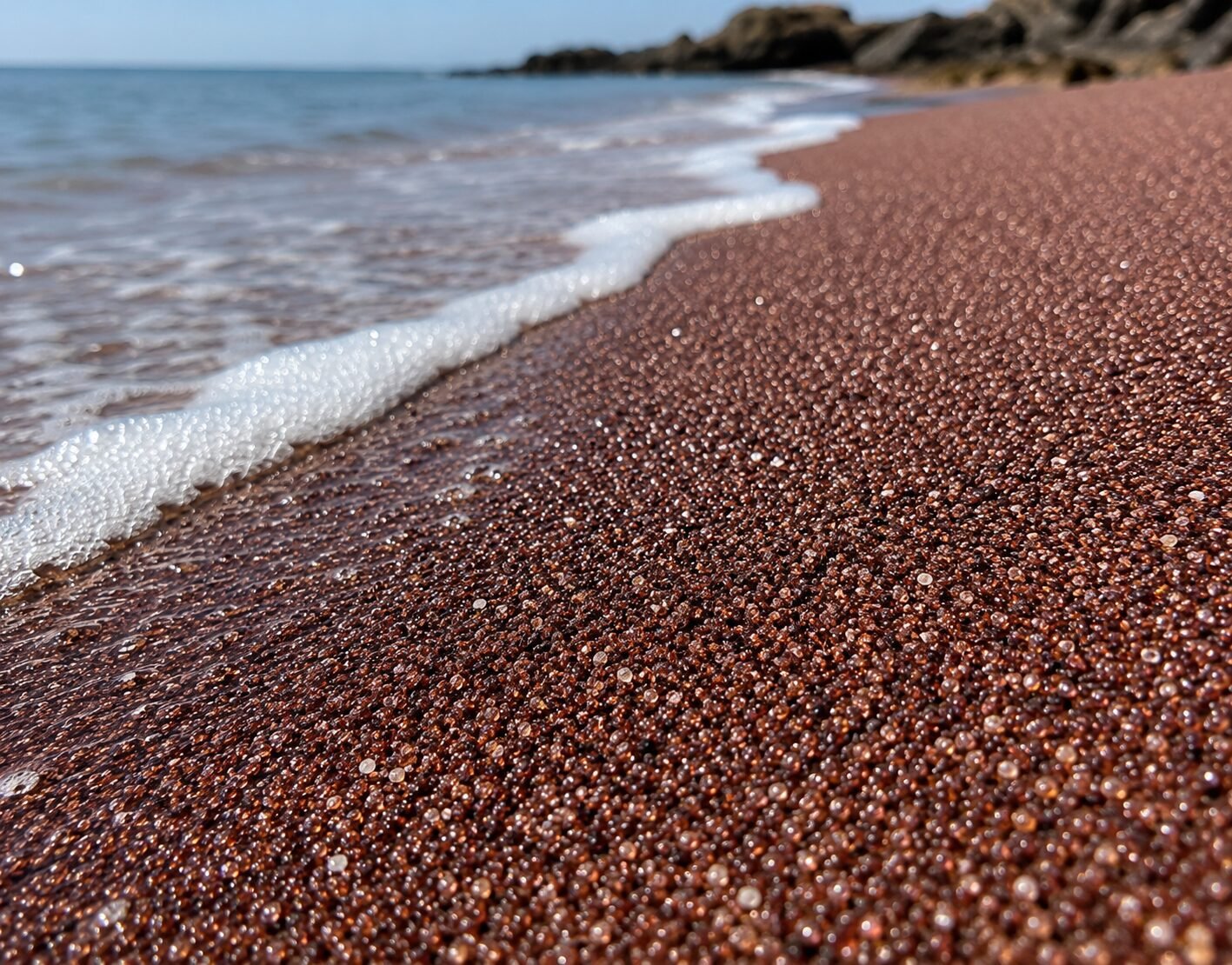
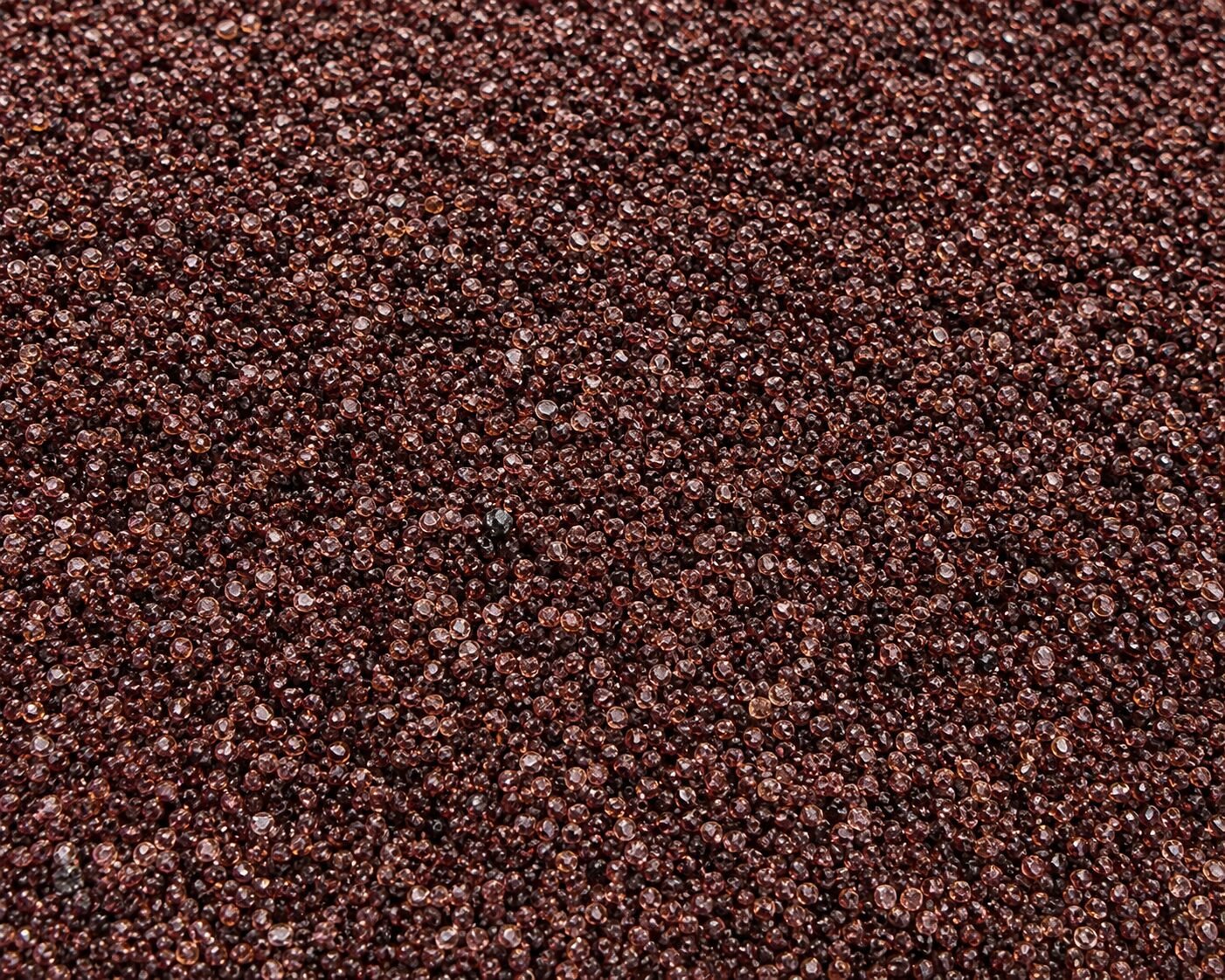
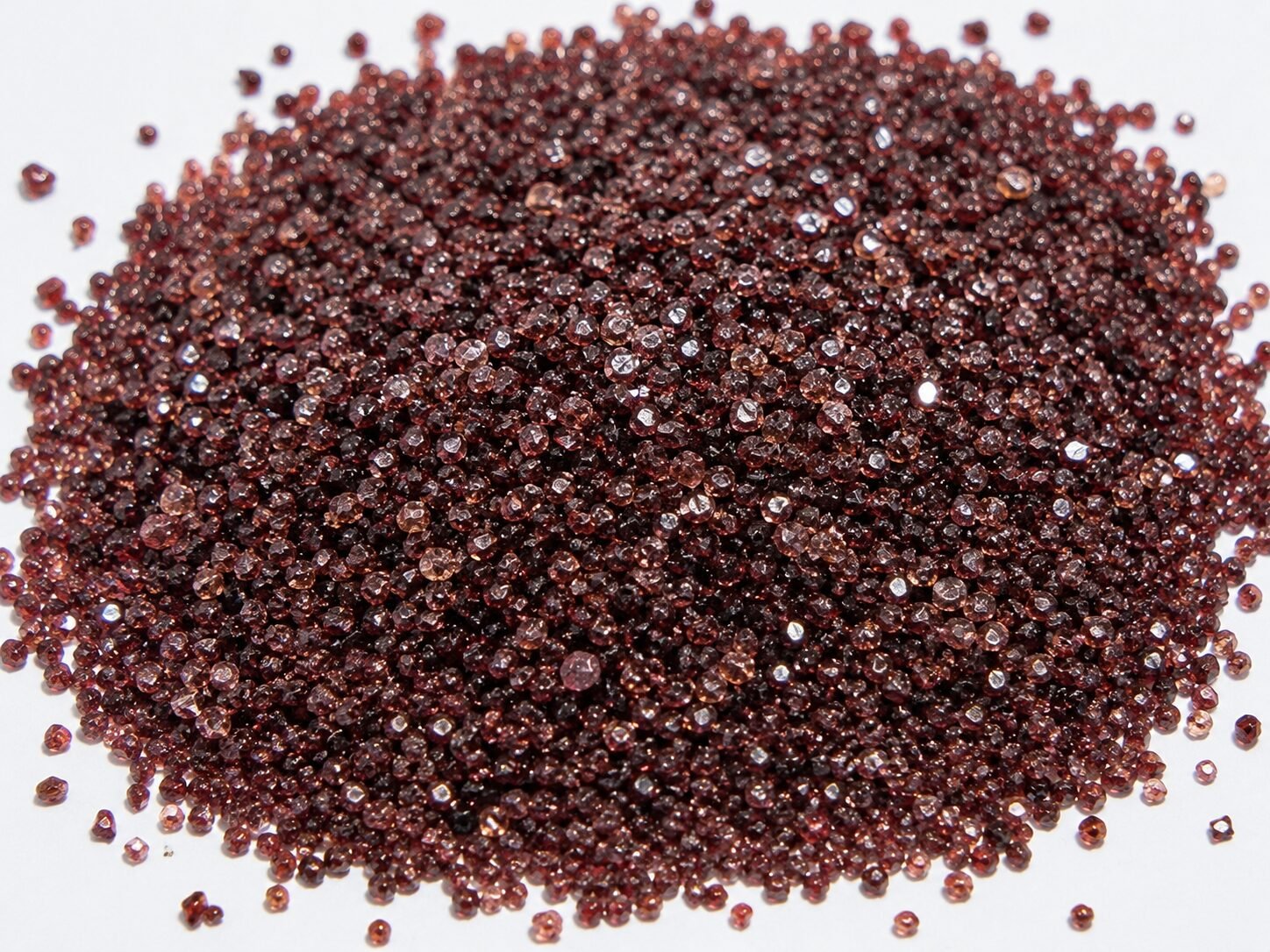
The preferred blasting abrasive for oil & gas pipeline coating, marine surface preparation and high-specification construction work. Garnet is angular, hard (7.5-8 Mohs), non-sparking and contains free silica below 1%. As a result, it produces a consistent surface profile to Sa 2.5 and Sa 3 standards and can be recycled 3 to 5 times in a closed blast room, significantly reducing abrasive consumption cost over time.
Additionally, We supply 30/60 mesh for standard pipeline and structural blasting, 20/40 mesh for heavier mill scale removal, and 80 mesh for waterjet cutting. We provide a Certificate of Analysis and grain size distribution report with every shipment.
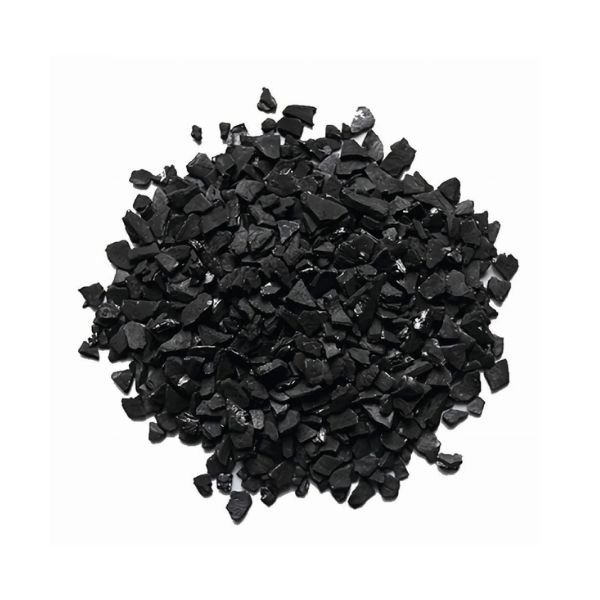
Copper Slag — Cost-Effective One-Pass Abrasive
As an alternative, A by-product of copper smelting, copper slag is a high-density abrasive used for aggressive surface preparation where recyclability is not a priority. It cuts fast, produces a clean profile and costs less per tonne than garnet. However, the trade-off is that copper slag is a one-pass abrasive — it breaks down on impact and cannot be recycled. Therefore, it is best suited for open-air blasting operations where abrasive collection is not practical and fast throughput matters more than abrasive economy.
Available in G-16, G-25 and G-40 grades. We provide SDS and composition certificate with every order.
Blasting Silica — Budget Grade (With Restrictions)
Silica sand is the lowest cost blasting abrasive but carries the most significant health risk. Free silica particles below 10 microns cause silicosis — an irreversible and potentially fatal lung disease — when inhaled during blasting. Many countries, including most EU members, have banned or heavily restricted silica sand blasting. Saudi Arabia permits its use under specific safety controls including supplied-air respirators, wet blasting or enclosure with extraction.
Consequently, we supply blasting silica where buyers require it for specific low-specification applications. For oil & gas, marine and any enclosed or high-exposure blasting work, we recommend garnet or copper slag on both safety and performance grounds. If your project specification references SSPC or NACE standards, these typically mandate low free-silica abrasives by default.
Abrasive Comparison — Which Grade Is Right for Your Work
| Property | Garnet Sand | Copper Slag | Blasting Silica |
| Hardness (Mohs) | 7.5 – 8 | 6 – 7 | 6 – 7 |
| Free silica content | Below 1% | Below 1% | High (health risk) |
| Recyclability | 3 – 5 cycles | 1 cycle only | 1 cycle only |
| Surface profile | 25 – 75 microns | 40 – 100 microns | 20 – 50 microns |
| SSPC / NACE compliant | Yes | Yes | Restricted use only |
| Best for | Oil & gas, marine, enclosed blasting | Open-air fast throughput | Low-spec outdoor only |
| Cost per tonne | Higher | Medium | Lowest |
| Cost per m2 blasted | Lowest (recyclability) | Medium | Highest (single use) |
Garnet costs more per tonne but less per square metre blasted across a full project — particularly in enclosed blast rooms where abrasive collection and recycling is standard practice.
Why Saudi Arabia Imports Blasting Sand
Saudi Arabia sits on some of the largest sand deposits in the world. So why do Saudi contractors import blasting abrasives from India and other countries?
The answer is grain shape. Natural desert sand grains are rounded — shaped by wind erosion over thousands of years. Abrasive blasting requires angular particles that fracture on impact with the steel surface, cutting away rust, mill scale and old coatings as they do so. Rounded grains do not cut — they bounce off the surface without producing the anchor profile that protective coatings need to adhere properly.
Garnet and copper slag are both angular, hard and dense. They are mined or processed specifically for their abrasive properties. India is the world largest exporter of garnet — primarily from the Rajasthan region — and supplies the majority of the GCC and Middle East blasting abrasive market. Jazeera International sources directly from Rajasthan processing facilities, which removes the trading margins that most Saudi importers add to their pricing.
The short answer: Saudi Arabia has sand, but not the right kind of sand for industrial blasting. The right kind has to be imported.
Blasting Sand Applications in Saudi Arabia
Oil and gas pipeline contractors represent the largest single buyer group for blasting abrasives in Saudi Arabia. Every gas, oil and water pipeline section requires abrasive blasting before external coating application — typically to Sa 2.5 or Sa 3 cleanliness under NACE or SSPC standards. With Saudi Aramco, SABIC and NEOM driving pipeline and process plant construction across the kingdom, blasting abrasive demand in Saudi Arabia runs at tens of thousands of tonnes per year.
Similarly, Marine and offshore facilities along the Red Sea and Arabian Gulf coasts require garnet for hull preparation and anti-corrosion coating work. Ship repair yards at Jeddah Islamic Port, Jubail and Yanbu are active buyers of blasting grade abrasives throughout the year.
In addition, Structural steel fabrication for industrial buildings, water tanks, bridges and infrastructure across Riyadh, Jeddah and the Eastern Province requires abrasive blasting before hot-dip galvanising or protective coating. Vision 2030 infrastructure projects — NEOM, The Red Sea Project, Diriyah Gate — represent a significant expansion in steel fabrication and surface preparation demand in the western region specifically.
Furthermore, Petrochemical facilities at Jubail and Yanbu Industrial Cities use blasting abrasives for maintenance and repair work — tank cleaning, vessel preparation and structural maintenance programmes that run on a continuous cycle throughout the year.
Blasting Sand Price in Saudi Arabia
Blasting sand pricing in Saudi Arabia depends on abrasive type, grade, quantity and current sea freight rates from Dubai to your destination port. However, Garnet commands a higher per-tonne price than copper slag but produces a lower cost per square metre blasted when recycled across a full project.
As a general guide: copper slag is the most cost-effective for large-volume open-air blasting where abrasive collection is not practical. Garnet is more cost-effective for blast room operations where recycling is standard. Blasting silica is the lowest purchase price but the highest overall project cost due to single-pass use and the additional safety controls it requires.
Moreover, we supply at wholesale pricing with better rates for full container load orders. For regular buyers — monthly or quarterly supply programmes across multiple Saudi sites — we can set up standing orders with pre-agreed pricing. Call or WhatsApp +971 56 158 9555 for a same-day Saudi Arabia price quote.
Delivery — Blasting Sand Supply Across Saudi Arabia
| Destination | Port | Lead Time |
| Jeddah | Jeddah Islamic Port / King Abdullah Port (KAEC) | 5-7 working days sea freight from Dubai |
| Yanbu | Yanbu Industrial Port | 5-7 working days sea freight from Dubai |
| Khobar / Dammam | King Abdulaziz Port, Dammam | 6-8 working days sea freight from Dubai |
| Riyadh | Riyadh Dry Port / road via UAE border | 3-4 working days road freight |
| Jubail | Jubail Industrial Port | 6-8 working days sea freight from Dubai |
| Any port to site | Local road delivery via Saudi forwarder | 1 working day after port clearance |
| Container orders | All Saudi ports | Most cost-effective – contact for rates |
| Documentation | All shipments | CoA, SDS, packing list, customs invoice |
Additionally, we handle all export documentation from Dubai.. Saudi import customs clearance requires a local freight forwarder. We can recommend partners we regularly work with in Jeddah, Khobar, Dammam and Riyadh.