Bentonite: What It Is, The Main Grades and What Each One Is For
Bentonite is clay that swells. That single property – absorbing many times its own weight in water and expanding into a gel – is why it turns up in drilling rigs, foundry floors, landfill liners and cosmetics counters, often within the same week for the same supplier.
The confusing part for buyers is that bentonite is not one product. Sodium and calcium grades behave very differently, and ordering the wrong one wastes the whole shipment. Here is how to tell them apart and which jobs need which.
What Bentonite Actually Is
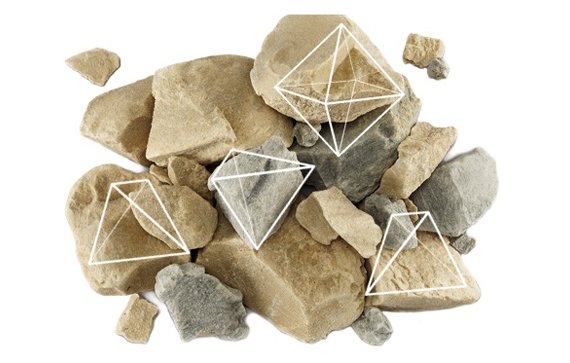
Bentonite is mostly montmorillonite, a clay mineral formed from weathered volcanic ash. The mineral has a layered structure, and water molecules slot between the layers and force them apart. That is the swelling. Depending on which ion sits between the layers – sodium or calcium – the clay swells a lot or only a little.
Sodium Bentonite
Sodium bentonite swells dramatically, sometimes 10 to 15 times its dry volume. It forms a thick gel with water and holds solid particles in suspension instead of letting them settle. It is the grade used wherever you need a fluid that seals, suspends or thickens.
Main uses:
- Drilling mud for water wells, oil wells and geotechnical boreholes – it carries cuttings up the hole and plasters the wall to stop fluid loss
- Diaphragm walls and piling – the bentonite slurry holds the excavation open until concrete is placed
- Landfill and pond liners – a layer of sodium bentonite swells into a near-impermeable barrier
- Waterproofing of basements and tunnels
Calcium Bentonite
Calcium bentonite swells far less, absorbs well and has strong adsorption properties – it pulls impurities out of liquids rather than thickening them. It is the grade for cleaning and binding rather than sealing.
Main uses:
- Foundry green sand – binds moulding sand so it holds shape against molten metal
- Edible oil and juice clarification, where it strips colour and impurities
- Animal feed binder and pellet binder
- Cat litter, cosmetics and face masks – the mass-market end of the market
Calcium bentonite can be converted to sodium form by treating it with soda ash. Activated or sodium-exchanged bentonite is common in markets without natural sodium deposits, and performs close to natural sodium grade for most applications.
Quick Grade Selector
| Job | Grade | Why |
| Water well or oil drilling mud | Sodium (API grade) | Needs high yield and viscosity |
| Diaphragm wall / piling slurry | Sodium | Must hold excavation open |
| Landfill or pond lining | Sodium | Swells into a sealing barrier |
| Foundry green sand | Calcium or blended | Needs bond strength, not swelling |
| Oil or juice clarification | Calcium (activated) | Adsorbs impurities |
| Feed and pellet binding | Calcium | Binds without gelling |
What to Check on the Spec Sheet
For drilling grades the number that matters is yield – the barrels of 15 centipoise mud one tonne of bentonite produces. API 13A specification bentonite yields around 90 to 100 barrels per tonne. Anything much below that means you burn more product to hit the same mud properties, and the cheaper price per tonne stops being cheaper.
Also worth confirming: moisture content below 12 percent, fineness (typically 200 mesh for drilling grades), and whether the material is natural sodium or soda-ash activated. Both work, but activated grades can lose some performance in high-salinity water, which matters for offshore and coastal drilling in the Gulf.
Buying Bentonite in the UAE
Jazeera International supplies sodium and calcium bentonite in drilling, civil and industrial grades from our Dubai warehouse, in 25kg bags and jumbo bags, with delivery across the UAE and export to Saudi Arabia, Qatar and Oman. Certificate of Analysis with every shipment.
FAQs
Sodium bentonite is used for drilling mud, diaphragm wall and piling slurry, landfill and pond liners and basement waterproofing – anywhere a material needs to swell, seal or suspend solids. Calcium bentonite is used for foundry green sand binding, edible oil and juice clarification, animal feed binding, cat litter and cosmetics, where adsorption and binding matter more than swelling.
Sodium bentonite swells 10 to 15 times its dry volume and forms a thick gel, which makes it the sealing and drilling grade. Calcium bentonite swells only slightly but adsorbs strongly, which makes it the binding and clarifying grade. Calcium bentonite can be treated with soda ash to convert it to sodium form, producing activated bentonite that performs close to the natural sodium grade.
API 13A specification sodium bentonite, typically ground to 200 mesh. The key number is yield – how many barrels of 15 centipoise mud one tonne produces. API grade yields around 90 to 100 barrels per tonne. Lower-yield material means you use more product for the same mud properties, so a cheaper price per tonne often costs more per well.
No. Bentonite is the main ingredient in water-based drilling mud, not the mud itself. A drilling fluid also contains water, weighting agents such as barite to control pressure, and various additives for viscosity, filtration control and pH. Bentonite provides the viscosity and the filter cake that seals the borehole wall.