Bag Closing Thread: Types, Sizes and Which One Your Machine Needs
Every filled bag that leaves a packing line – rice, flour, cement, fertiliser, animal feed – gets closed with a few grams of thread. It is one of the cheapest inputs in the whole operation, and one of the most annoying when it goes wrong. Thread breaks stop the line. Weak stitches split in transit. The wrong count jams the machine.
This guide covers the thread types and sizes used in bag closing, and how to match thread to your machine and bag material. It is written for packing plant operators, procurement staff and anyone who has stood next to a Newlong or Fischbein machine wondering why the thread keeps snapping.
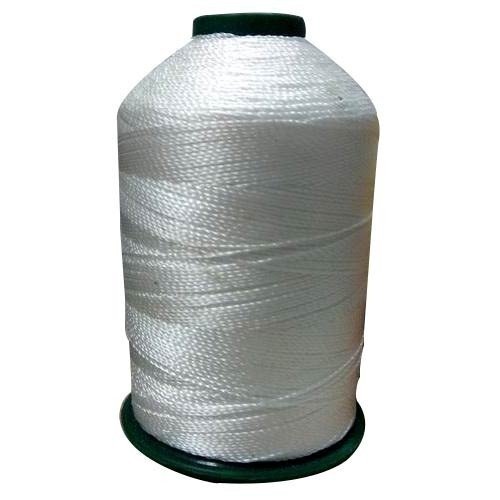
The Three Thread Materials
Spun Polyester – The Default Choice
Most bag closing today runs on 100 percent spun polyester. It is strong, cheap, resists moisture and rot, and runs cleanly through high-speed portable and pedestal closers. If you are not sure what to order, order spun polyester. It handles PP woven bags, paper bags and jute equally well.
Cotton and Poly-Cotton
Cotton thread was the traditional choice and still has one real advantage: it grips better on paper bags because the fibre is hairier. Some flour and sugar mills stay with cotton or a poly-cotton blend for that reason. The downside is lower strength than polyester at the same count, and it absorbs moisture, which matters in humid Gulf warehouses.
PP Multifilament
Polypropylene thread is the budget option, common on low-speed operations closing PP woven bags. It is lighter than polyester and floats, but it has lower heat resistance – fast machines generate needle heat that can soften PP thread and cause breaks. If your closer runs above roughly 1,800 rpm, stay with polyester.
Understanding Thread Counts: What 20/6 Actually Means
Bag thread is sold in counts written like 12/4, 12/5, 20/6. The first number is the yarn fineness (English cotton count – higher means finer yarn). The second is how many yarns are twisted together (the ply). So 12/4 means four strands of count-12 yarn; 20/6 means six strands of finer count-20 yarn.
In practice, only a few counts cover almost all bag closing work:
| Count | Approx. Strength | Typical Use |
| 12/4 | Standard | General PP woven and paper bag closing – the workhorse count |
| 12/5 | Heavy | Heavier bags – 50kg cement, fertiliser, animal feed |
| 20/6 | Fine, strong | High-speed machines, cleaner stitch appearance |
| 10/4 – 10/5 | Extra heavy | Jute sacks, heavy-duty industrial bags |
If your bags are splitting at the stitch line in transit, move up one ply before blaming the bag. It is the cheaper fix and usually the right one.
Matching Thread to Your Machine
Portable closers (Newlong NP-7A, Fischbein F, GK9 clones) take 12/4 or 12/5 on 200-gram king spools that mount on the machine. They are single-thread chainstitch machines, so the whole seam depends on one thread – do not economise on quality here, because one weak spot unravels the entire stitch line.
Pedestal and conveyor-line closers (Newlong DS-9, Fischbein Empress, Union Special) run faster and often use a two-thread configuration. These machines are happier on 20/6, which runs cooler through the needle at speed. Buy thread on larger 1kg or 2kg cones for these, not king spools – fewer changeovers per shift.
The most common cause of thread breaks is not the thread. It is a worn needle, wrong needle size, or tension set too high after someone “fixed” the machine. Rule out those three before switching thread suppliers.
How Much Thread Per Bag
A standard 50cm bag mouth with a single-thread chainstitch uses roughly 2.5 to 3 metres of thread including the chain tails. A 200g king spool of 12/4 holds about 1,000 metres, so expect around 330-380 bags per spool. High-speed lines on 2kg cones get proportionally more. Knowing this number lets you calculate thread cost per bag – which is usually under half a fils and explains why quality thread is never worth economising on.
Buying Bag Closing Thread in the UAE
Jazeera International stocks spun polyester bag closing thread in 12/4, 12/5 and 20/6 counts, on king spools and cones, from our Dubai warehouse. We supply packing plants, rice and flour mills, cement baggers and feed producers across the UAE with same-day delivery in Dubai and Sharjah.
Frequently Asked Questions
Q: What thread is used for bag closing machines?
A: Most bag closing machines run 100 percent spun polyester thread in counts 12/4, 12/5 or 20/6. Portable closers like the Newlong NP-7A take 12/4 or 12/5 on 200g king spools. High-speed pedestal machines run better on 20/6 from 1kg or 2kg cones. Cotton and poly-cotton remain in use on paper bags where the hairier fibre grips better.
Q: What does 12/4 mean on bag sewing thread?
A: The first number is the yarn fineness in English cotton count and the second is the ply – how many yarns are twisted together. 12/4 means four strands of count-12 yarn twisted into one thread. Higher first number means finer yarn; higher second number means more strands and more strength. 12/4 is the standard general-purpose bag closing count.
Q: Why does my bag closing thread keep breaking?
A: Check the machine before the thread. The three most common causes are a worn or burred needle, the wrong needle size for the thread count, and top tension set too high. If the machine checks out, the thread may be too light for the speed – PP thread softens from needle heat above roughly 1,800 rpm, so switch to spun polyester, or move from 12/4 to 20/6 which runs cooler at speed.
Q: How many bags does one spool of thread close?
A: A 200g king spool of 12/4 spun polyester holds about 1,000 metres. A standard 50cm bag mouth uses 2.5 to 3 metres per closure including chain tails, so one spool closes roughly 330-380 bags. Larger 1kg and 2kg cones for pedestal machines close proportionally more between changeovers.