What Are Marble Chips? Uses in Construction, Landscaping and Terrazzo
Marble chips are small pieces of crushed marble, graded by size and sold by the bag or by the tonne. That is the short answer. The longer answer depends on what you want them for, because a terrazzo contractor, a landscaper and a chemistry teacher are all buying the same material for completely different reasons.
This guide covers what marble chips actually are, the standard size grades, and what each one is used for in the UAE market.
What Marble Chips Are Made Of
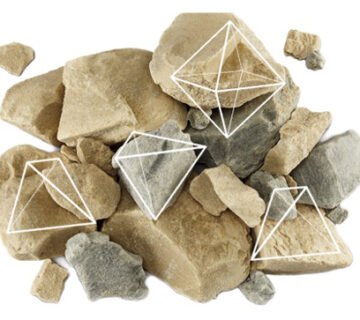
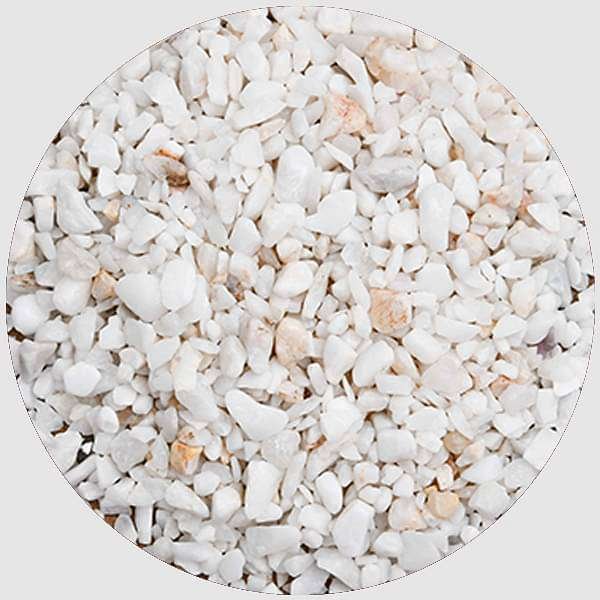
Marble is limestone that recrystallised under heat and pressure. Chemically it is calcium carbonate, CaCO3, usually above 95 percent purity in commercial white grades. Crushing plants take marble blocks and offcuts, break them down, then screen the output into size fractions.
Colour depends on the source rock. White is the most common commercial grade in the UAE. Grey, beige, black, green and pink chips exist too, and landscapers pay a premium for the unusual colours. Purity matters more for chemical and industrial buyers. Colour matters more for decorative buyers.
Standard Marble Chip Sizes
Suppliers grade chips by particle size range. These are the sizes you will see in the UAE market:
| Grade | Size Range | Main Use |
| Marble powder | Below 0.5mm | Filler in paints, putty, adhesives |
| Fine chips (0) | 0.5 – 2mm | Terrazzo fine texture, wall finishes |
| Grade 1 | 2 – 4mm | Standard terrazzo flooring |
| Grade 2 | 4 – 7mm | Coarse terrazzo, exposed aggregate |
| Grade 3 | 7 – 12mm | Landscaping, garden beds, planters |
| Grade 4 / decorative | 12 – 25mm | Ground cover, pathways, water features |
If you are matching an existing terrazzo floor, take a photo and measure the visible chip size before ordering. Getting the grade wrong is the most common mistake in terrazzo repair work.
Use 1: Terrazzo Flooring
Terrazzo is the biggest single use of marble chips in the Gulf. The floor is a mix of marble chips and cement (or epoxy resin in modern systems), poured, cured, then ground flat and polished until the chips show as a smooth decorative surface.
A typical cement terrazzo mix runs about 2 parts marble chips to 1 part white cement by volume. Chip grade sets the look. Grade 1 (2-4mm) gives the classic fine speckle you see in older UAE villas and mosques. Grade 2 gives a bolder pattern. Some contractors blend two colours of chip for contrast.
One thing terrazzo contractors know that buyers often do not: chip hardness matters. Marble is soft enough to grind and polish evenly with the cement matrix. Harder stones like granite chips polish at a different rate and leave an uneven surface. That is why terrazzo uses marble, not just any crushed stone.
Use 2: Landscaping and Garden Cover
White marble chips are popular ground cover in UAE landscaping for a practical reason: they reflect sunlight instead of absorbing it. Dark gravel in a Dubai summer gets hot enough to stress plant roots. White marble stays cooler and keeps beds looking clean.
Landscapers use grade 3 and 4 chips (7-25mm) for garden beds, planter toppings, pathway borders and around water features. The chips also suppress weeds and slow evaporation from the soil beneath. Expect to need roughly 80-100kg per square metre at a 5cm depth.
One caution: marble is calcium carbonate, and it slowly raises soil pH as it weathers. For acid-loving plants this is a problem. For most UAE landscape planting – which tolerates alkaline soil anyway – it does not matter.
Use 3: Construction and Manufacturing
Crushed marble goes into more products than most people realise. Marble powder is a filler in wall putty, paints, adhesives and artificial stone. Chip grades go into precast decorative panels, cladding, and exposed aggregate concrete finishes. Cultured marble – the material of many bathroom vanities – is marble powder bound in resin.
Use 4: Chemistry – Why Schools Buy Marble Chips
If you searched for marble chips in chemistry, this is your section. Marble chips are the standard source of calcium carbonate in school chemistry experiments, most famously the reaction with dilute hydrochloric acid:
CaCO3 + 2HCl → CaCl2 + H2O + CO2
The reaction produces carbon dioxide gas at a rate that is easy to measure, which is why it appears in almost every rates-of-reaction experiment. Teachers use different chip sizes to demonstrate surface area effects: small chips react faster than large chips because more surface is exposed to the acid.
For lab use, buy small quantities of clean white chips in the 2-7mm range. Purity above 95 percent CaCO3 gives consistent results.
Buying Marble Chips in the UAE
Jazeera International supplies marble chips in all standard grades from powder to 25mm decorative, in white and colour options, from our Dubai warehouse. We sell by 25kg bag for small projects and by the tonne for terrazzo contractors and landscapers. Same-day delivery across Dubai and Sharjah.
Frequently Asked Questions
Q: What are marble chips used for?
A: The four main uses are terrazzo flooring (chips mixed with cement or epoxy, then ground and polished), landscaping (white chips as decorative ground cover that stays cool in the sun), construction fillers (marble powder in putty, paint and artificial stone) and chemistry education (as a calcium carbonate source for acid reactions). Grade and size determine which use a particular chip suits.
Q: What are marble chips used for in chemistry?
A: Marble chips are the standard laboratory source of calcium carbonate (CaCO3). The classic experiment reacts them with dilute hydrochloric acid to produce carbon dioxide gas: CaCO3 + 2HCl gives CaCl2 + H2O + CO2. Teachers use different chip sizes to show how surface area affects reaction rate – smaller chips react faster because more surface contacts the acid.
Q: What size marble chips do I need for terrazzo?
A: Standard terrazzo uses Grade 1 chips (2-4mm) for the classic fine speckled look, or Grade 2 (4-7mm) for a bolder pattern. If you are repairing or extending an existing floor, measure the visible chip size in the old surface first and match it – a grade mismatch is obvious once the floor is ground and polished.
Q: Are marble chips good for garden beds in the UAE?
A: Yes, with one caveat. White marble chips reflect heat instead of absorbing it, which protects plant roots in summer, and they suppress weeds and slow soil evaporation. The caveat: marble slowly raises soil pH. Most UAE landscape plants tolerate alkaline soil, but avoid marble chips around acid-loving species. Use grade 3 or 4 (7-25mm) and allow 80-100kg per square metre at 5cm depth.