FIBC jumbo bags — Flexible Intermediate Bulk Containers — are the workhorse packaging format of Saudi chemical, mining and bulk material sectors. From phosphate fertilizers shipped out of Yanbu to bauxite handled at Ras Al Khair, from chemical intermediates at Jubail to mineral concentrates at Sudair mining sites, FIBC bags move billions of tonnes annually across Saudi industrial operations.
This guide explains which FIBC type suits each application, what specifications to insist on for hazardous materials and how to structure your sourcing to reduce cost without compromising quality. It is written for procurement managers, plant operators and logistics teams at Saudi chemical and mining companies.
The Five Main FIBC Types for Industrial Use
Standard Type A FIBC
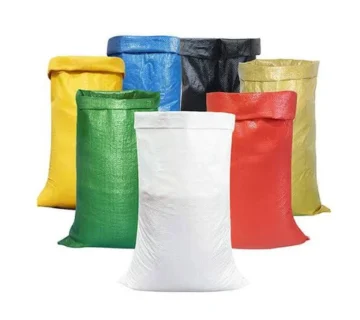
Standard polypropylene woven FIBC with no special features. Specifically, used for non-flammable, non-hazardous bulk materials — sand, aggregates, fertilizers, cement, food-grade powders. Type A is the lowest cost and highest volume FIBC across Saudi industrial supply chains.
Furthermore, Type A bags do not control static electricity. They cannot be used for flammable powders or in environments containing flammable vapours. Most chemical applications require Type B, C or D instead.
Type B FIBC — Low Breakdown Voltage
Type B bags use a polypropylene fabric with breakdown voltage below 6 kV. This limits spark energy if static discharge occurs — preventing the spark from igniting flammable powders inside the bag. Moreover, Type B is suitable for filling and emptying flammable powders only when no flammable vapours are present in the surrounding atmosphere.
Type C FIBC — Conductive (Grounded)
Type C bags incorporate conductive yarns woven into the fabric. Specifically, these conductive threads connect to a grounding point during use — earthing the bag so static charge dissipates harmlessly. Saudi petrochemical companies handling combustible powders use Type C FIBC as the standard safety specification. Additionally, the bag must be properly grounded every time it is filled or emptied — if the grounding connection fails, the bag becomes unsafe.
Type D FIBC — Static Dissipative (Self-Grounding)
Type D uses a fabric with static-dissipative properties that allow charge to dissipate without requiring external grounding. Moreover, Type D is the safest option for environments where reliable grounding is difficult — outdoor operations, mining sites with portable equipment, or facilities where grounding points are not consistently available. The trade-off is higher unit cost than Type C.
Food-Grade FIBC
Food-grade FIBC use virgin polypropylene without recycled content, an inner food-safe PE liner and ISO 21898 + EFSA compliance documentation. Saudi food manufacturers — sugar refineries, flour mills, agricultural commodity importers at Jeddah port — require food-grade FIBC for direct food contact applications.
UN-Rated FIBC for Hazardous Materials Transport
Chemical and mining buyers in Saudi Arabia who ship dangerous goods by road or sea require UN-rated FIBC. Specifically, UN 13H3 and UN 13H4 bags carry tested certification under UN ADR and IMDG regulations for transporting hazardous solids.
Each UN-rated bag is individually labelled with its certification mark, packing group rating, drop test result, top-lift test result and stack test result. Saudi customs require these labels for hazardous material imports and exports. Moreover, the labelled bag and the certification documentation must match — buying unlabelled bags or bags without traceable certification creates compliance risk.
Specifications That Matter for Chemical and Mining Use
When sourcing FIBC for Saudi chemical or mining applications, focus on these technical specifications:
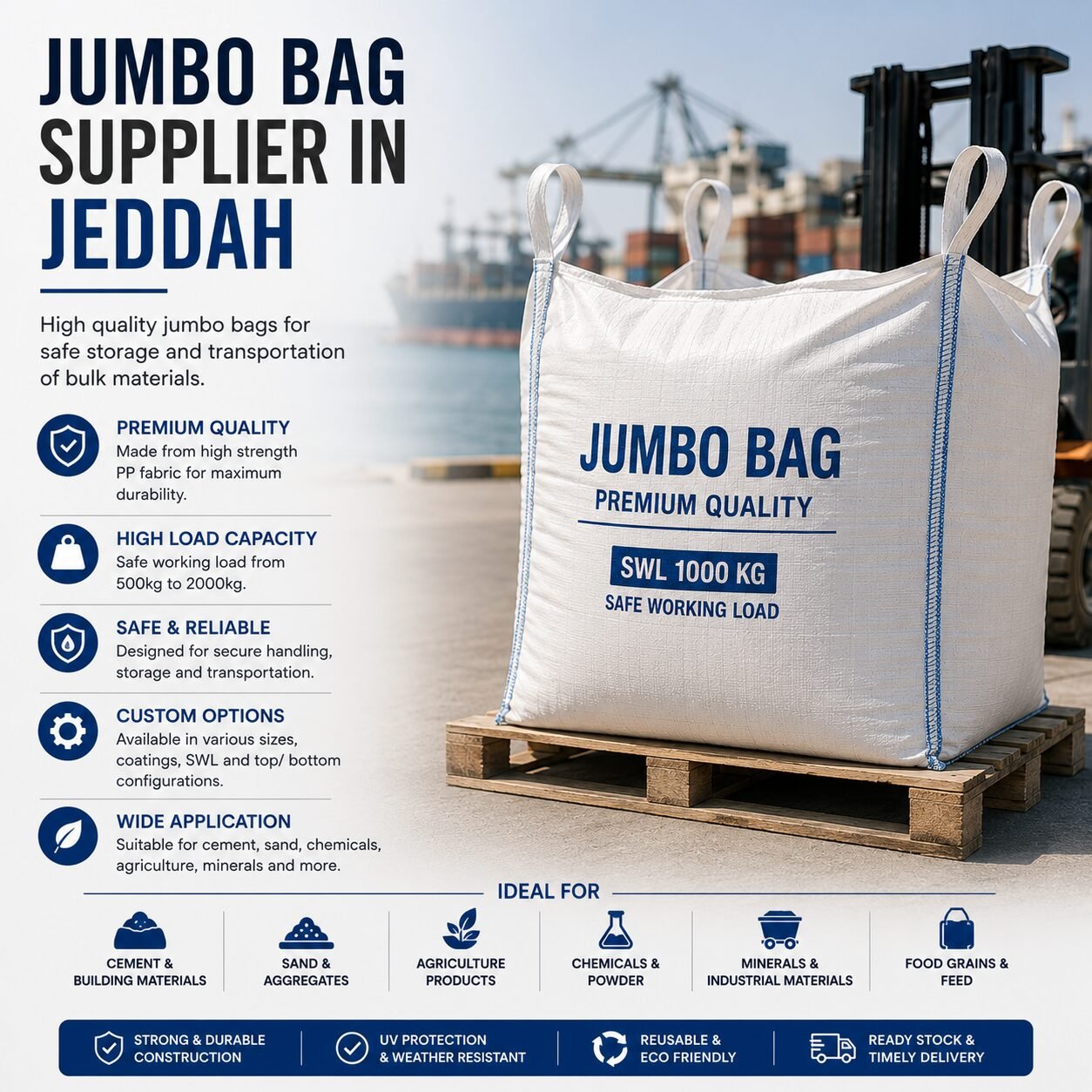
- Safe Working Load — typically 1000kg (1 tonne) at 5:1 safety factor (ISO 21898)
- Material — virgin polypropylene, no recycled content for food-grade applications
- Construction — circular woven, U-panel, or 4-panel depending on filling method
- Top design — open top, duffle top, or filling spout matched to filling equipment
- Bottom design — flat bottom (single-use disposal) or discharge spout (gravity unloading)
- Liner — none, PE liner for moisture-sensitive materials, or food-grade liner
- Loops — 4 corner loops standard, cross corner loops for specialised lifting
- UV stabilization — required for outdoor storage in Saudi sun
How to Reduce FIBC Cost Without Compromising Quality
Order at Container Quantity
FIBC pricing improves significantly at container load quantities (500 bags minimum in a 20ft container). Specifically, the per-unit cost difference between 100 bags and 500 bags is often 20 to 30 percent. For ongoing project supply, container ordering is the single largest cost reduction.
Standardise Specifications Across Sites
Using the same FIBC specification across multiple plant sites lets you consolidate orders into larger purchases. Furthermore, one 1000-bag order has a much better per-unit price than five 200-bag orders even when the total volume is the same.
Buy Through a Regional Distributor Who Imports Direct
Most Saudi distributors buy FIBC from regional traders who buy from Asian wholesalers who buy from the factory. Each layer adds margin. Specifically, work with a UAE-based supplier who imports directly from the factory in India or China — this removes two layers of trading margin while keeping shipping times short.
Sourcing FIBC for Saudi Chemical and Mining Operations
Jazeera International supplies FIBC jumbo bags to chemical, mining, food processing and construction companies across Saudi Arabia — Jeddah, Riyadh, Khobar, Dammam and Yanbu. We import directly from certified manufacturers and ship to Jeddah Islamic Port in 5 to 7 working days or road freight to Riyadh in 3 to 4 days.
We supply standard FIBC, Type B, C and D anti-static bags, UN-rated 13H3 and 13H4 bags and food-grade FIBC with documented compliance. For complete specifications, capacity options and current pricing for Saudi delivery, see our jumbo bag supply page for Jeddah
Frequently Asked Questions
Q: Which FIBC type should Saudi chemical companies use for combustible powders?
A: For combustible powder handling, Type C (conductive, grounded) is the standard choice when reliable grounding points are available — common in fixed plant locations at Jubail and Yanbu petrochemical facilities. Type D (static dissipative, self-grounding) is preferred for outdoor, mobile or mining environments where grounding is unreliable. Both types prevent the static discharge that could ignite the powder.
Q: What does UN 13H3 certification mean on an FIBC?
A: UN 13H3 is a certification under UN ADR and IMDG regulations confirming the FIBC has passed drop tests, top-lift tests and stack tests for the safe transport of dangerous goods solids. It is required for hazardous chemical and mineral shipments through Saudi customs. UN 13H4 is the equivalent rating for FIBC with an internal liner. Each bag must carry an individual label matching the certification documentation.
Q: Can the same FIBC be used for food and chemical materials?
A: No. Food-grade FIBC use virgin polypropylene without recycled content and a dedicated food-safe liner — and are dedicated to food applications only. Reusing them for chemicals contaminates the bag and disqualifies it from food use. Saudi food regulators require traceable food-grade certification for every bag used in food handling.
Q: How can Saudi mining companies reduce FIBC cost?
A: Three main approaches: First, consolidate ordering into container load quantities (500+ bags) which improves per-unit pricing 20 to 30 percent. Second, standardise FIBC specifications across multiple mining sites to enable larger combined orders. Third, source from a UAE-based importer who buys direct from the factory rather than from a Saudi distributor who adds another margin layer.