Jeddah Islamic Port is one of the busiest ship repair centres in the Red Sea. Vessels arrive every week for hull restoration, draft mark renewal, fouling removal and protective coating renewal — all of which start with surface preparation through abrasive blasting. The choice of blasting sand for this work directly determines coating life, contractor productivity and compliance with classification society standards.
This guide explains how to select the right blasting media for ship hull restoration in Jeddah dry docks, what specifications to insist on and how to avoid the most common mistakes that lead to early coating failure.
Why Surface Preparation Matters in Marine Coating
Marine protective coatings — anti-corrosive primers, anti-fouling topcoats and tank linings — only perform as designed if the steel beneath them is properly prepared. Specifically, the steel must be cleaned to a defined cleanliness standard (typically Sa 2.5 near-white metal under ISO 8501-1) and roughened to a defined surface profile (typically 50 to 75 microns under ISO 8503).
Furthermore, the surface profile created by blasting is what gives the coating its mechanical key — without the correct profile, the paint fails to bond and delaminates within months. Get the blasting media wrong and the most expensive coating system on the market will fail prematurely.
Why Silica Sand is No Longer Acceptable for Marine Blasting
Decades ago, silica sand was the default abrasive for ship hull preparation. Specifically, today most classification societies and port authorities — including those governing Jeddah Islamic Port — restrict or prohibit silica sand for enclosed blasting work because of silicosis risk. Free silica particles released during blasting cause irreversible lung disease when inhaled.
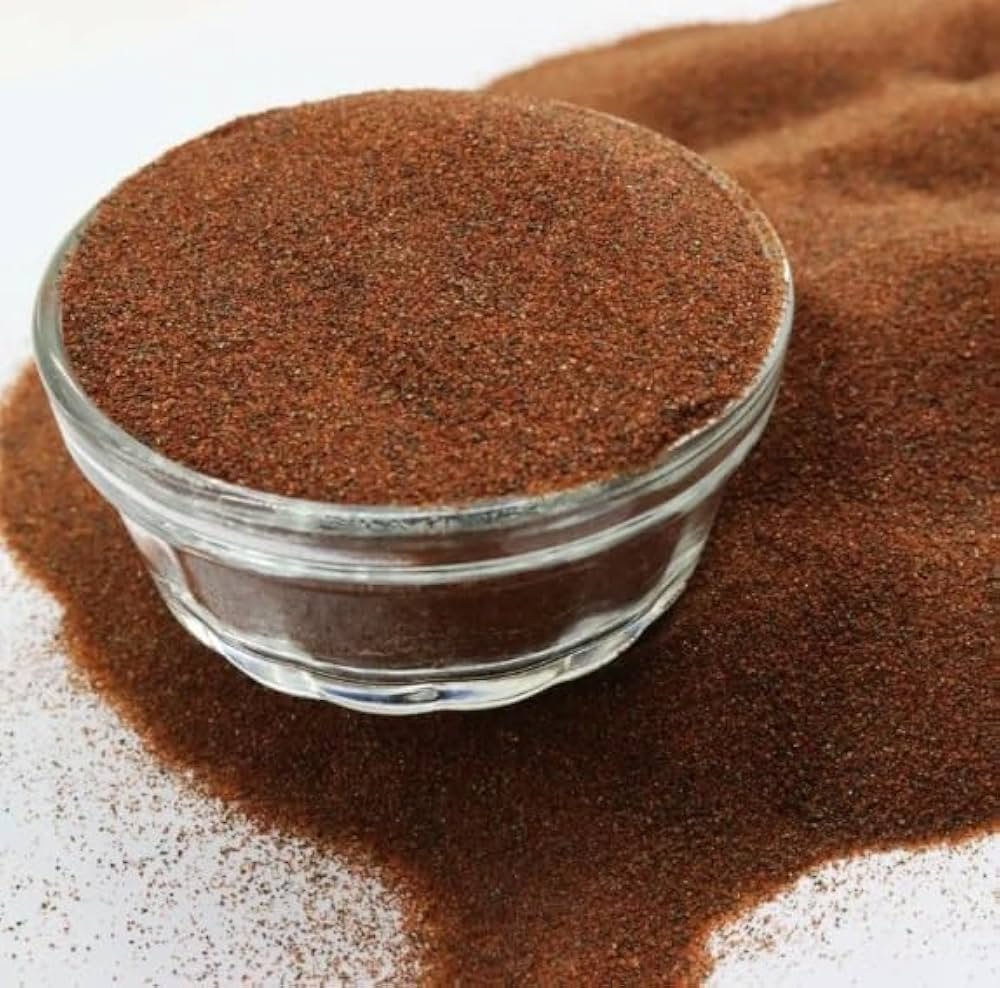
Consequently, NACE RP0375 and SSPC AB-3 specifications now require abrasives with free silica content below 1 percent. Garnet meets this threshold; silica sand does not. Additionally, garnet recycles three to five times per blast cycle — making it more economical per square metre blasted than single-use silica sand.
The Right Garnet Grade for Ship Hull Restoration
30/60 Mesh — The Standard for Hull Blasting
For most ship hull restoration work in Jeddah, 30/60 mesh garnet is the correct grade. This particle size produces a surface profile of 40 to 65 microns, which falls within the range specified by most marine coating manufacturers for hull primers and anti-fouling systems.
Moreover, 30/60 mesh gives an efficient cut rate on existing coatings while leaving a clean substrate for the new system. Larger fragments would damage the steel; finer particles would not produce sufficient profile for coating adhesion.
20/40 Mesh — For Heavy Mill Scale and Thick Coatings
When restoring older vessels with heavy mill scale or thick layers of failed paint, 20/40 mesh garnet provides a more aggressive cut rate. The coarser particles strip thick coatings faster than 30/60 mesh, reducing labour hours on heavy preparation jobs. The trade-off is a deeper surface profile of 55 to 75 microns, which the coating manufacturer must approve for the specific system being applied.
80 Mesh — For Waterjet Cleaning and Wet Abrasive Systems
Some Jeddah dry docks now use wet abrasive blasting and ultra-high pressure waterjet systems to control dust and improve worker safety. These systems use fine garnet at 80 mesh which suspends in the water stream and provides controlled, low-dust surface preparation suitable for spot repairs and tank interiors.
Specifications to Insist On When Buying
When sourcing blasting sand for marine work in Jeddah, the supplier must provide documentation for every shipment. Specifically you need:
- Certificate of Analysis confirming grain size distribution within tolerance
- Free silica content certified below 1 percent (NACE RP0375 compliance)
- Hardness 7.5 to 8 on the Mohs scale (almandine garnet specification)
- Chloride and conductivity reports — critical for marine coating work
- Safety Data Sheet (SDS) for the abrasive
- Origin documentation — Rajasthan, India is the largest producer of high-grade marine garnet
Common Mistakes That Cause Coating Failure
Mistake 1: Buying on Price Without Checking Origin
Garnet quality varies enormously between source regions. Indian almandine garnet from Rajasthan meets marine coating specifications consistently. Some lower-cost grades from other sources contain higher impurity levels that contaminate the surface and reduce coating adhesion. Specifically, ask the supplier where their garnet is sourced and processed — not just where it is shipped from.
Mistake 2: Switching Suppliers Mid-Project
Batch-to-batch consistency matters more than you would expect. Different garnet batches with slightly different particle distributions produce slightly different surface profiles. Furthermore, on a long project this variation can show up as visible differences in coating finish. Choose one supplier and stay with them for the duration of a major ship restoration project.
Mistake 3: Storing Garnet Outdoors in Humid Conditions
Jeddah humidity affects abrasive performance. Wet garnet does not flow correctly through blast equipment and produces inconsistent surface profile. Moreover, contaminated abrasive transfers salt and moisture to the steel surface — causing coating failure at the substrate interface. Store all marine blasting garnet under cover and use within 90 days of delivery.
Why Jazeera International Supplies Marine-Grade Garnet to Jeddah
Jazeera International supplies garnet sand to ship repair contractors at Jeddah Islamic Port and the broader western Saudi marine sector. We source from certified processing facilities in Rajasthan and ship to Jeddah Islamic Port in 5 to 7 working days from our Dubai warehouse. Every shipment includes Certificate of Analysis, grain size distribution curve and SDS for compliance verification by your coating inspector.
Frequently Asked Questions
Q: What is the best abrasive for ship hull blasting in Jeddah?
A: For most marine hull restoration work in Jeddah, 30/60 mesh almandine garnet from Rajasthan is the industry standard. It produces a surface profile of 40 to 65 microns suitable for marine primer and anti-fouling coating systems. It also meets NACE RP0375 and SSPC AB-3 free silica requirements (below 1 percent) which silica sand cannot match.
Q: Why can I not use silica sand for ship blasting?
A: Silica sand contains high levels of free silica which causes silicosis (a serious lung disease) when inhaled during blasting. NACE RP0375 and most port authority safety regulations now prohibit silica sand for enclosed blasting work in dry docks. Garnet contains less than 1 percent free silica and is the compliant alternative.
Q: What is the difference between 30/60 and 20/40 mesh garnet for marine use?
A: 30/60 mesh produces a 40 to 65 micron surface profile and is the standard choice for most hull restoration work. 20/40 mesh produces a coarser 55 to 75 micron profile and is used for heavy mill scale removal or stripping thick coatings, but the coating manufacturer must approve the deeper profile.
Q: How fast can garnet be delivered to Jeddah for a dry dock project?
A: Sea freight from Dubai to Jeddah Islamic Port takes 5 to 7 working days. For large dry dock restoration projects, pre-scheduling delivery in container loads is the most cost-effective approach. Smaller pallet quantities ship faster with slight per-tonne premium.